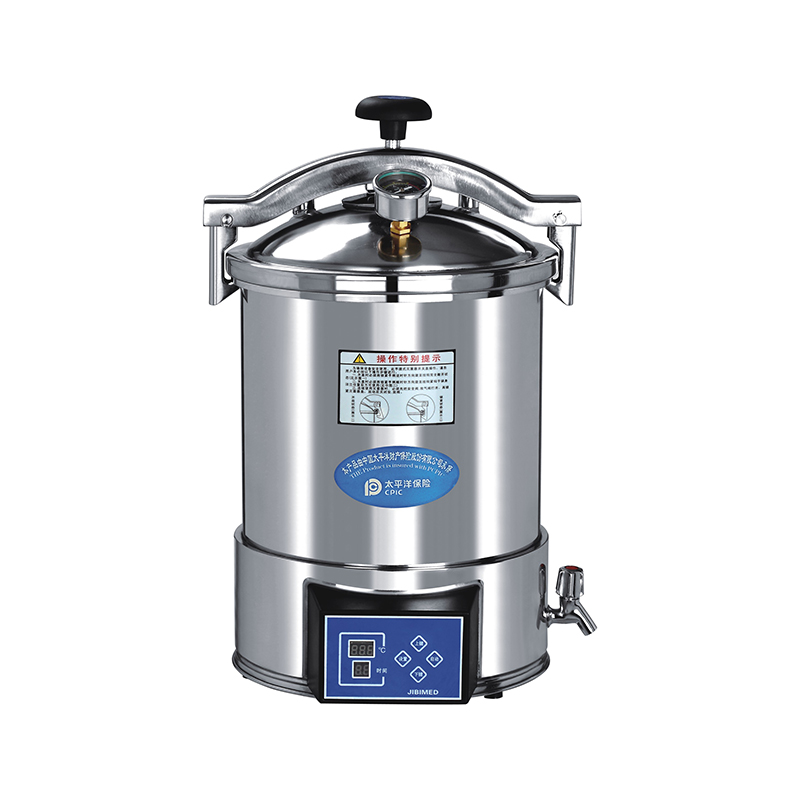
A biological indicator for autoclave use is the most dependable way to verify sterilization because it challenges the cycle with highly resistant bacterial spores. If the spores are killed, the cycle conditions were sufficient at the indicator’s location; if they survive, the load must be treated as non-sterile and the process investigated.
In practice, a BI does not “prove every item is sterile” in an absolute sense; it provides strong, evidence-based confirmation that time, temperature, and saturated steam reached the most difficult-to-sterilize point you selected (often via a process challenge device). That is why many facilities use BIs routinely and whenever the risk of a missed sterilization step is unacceptable.
Biological indicators contain a standardized population of spores known to be difficult to kill with moist heat. After the cycle, the BI is incubated (or processed in a rapid reader). If spores grow, the BI turns positive—meaning surviving organisms were detected.
Steam sterilization BIs commonly use Geobacillus stearothermophilus spores because they are relatively resistant to moist heat compared with typical contaminants. This creates a conservative challenge: if your autoclave can inactivate these spores under your cycle settings, routine bioburden is very unlikely to survive.
Select BIs that match your sterilization modality (moist heat/steam) and your workflow (standard incubation vs rapid readout). Use products that specify the intended cycle types and temperatures used by your facility (for example, common steam setpoints like 121°C and 134°C ).
| BI format | Typical readout time | Operational notes | Best fit |
|---|---|---|---|
| Self-contained vial BI | 24–48 hours (typical) | Integrated growth media; incubate at specified temperature; interpret color/fluorescence per IFU | Routine monitoring when overnight incubation is acceptable |
| Rapid-readout BI (steam) | ~1–3 hours (typical) | Requires compatible reader; supports faster release decisions for time-sensitive loads | Implants or urgent turnover environments |
| Spore strip BI | 2–7 days (typical) | Requires aseptic transfer into culture media; higher handling burden and contamination risk | Low-volume settings with lab support |
Many steam BIs are manufactured with a high spore load (commonly around 10 6 spores ) to create a stringent challenge. This helps your BI serve as a meaningful “worst-case” test rather than a minimal check.
Correct placement is the difference between a BI that truly challenges your process and one that simply rides along in an easy-to-sterilize spot. The goal is to place the BI at the location most likely to be difficult for steam to penetrate and for air to be removed.
A PCD is designed to simulate a difficult-to-sterilize item (for example, a dense pack or a lumened pathway). Placing the BI inside a validated PCD helps standardize the challenge from cycle to cycle and reduces “easy pass” results caused by inconsistent placement.
Your frequency should be driven by risk and policy. A common risk-based approach is to run BIs on a regular schedule and increase BI use for high-consequence loads or after events that could affect performance (repairs, relocation, new packaging, new load configurations).
If your operation uses multiple cycle types (gravity, pre-vac, different setpoints), ensure BI monitoring reflects the cycles you actually run. The highest-risk cycle/load combination deserves the most frequent challenge.
Consistency is the objective. The workflow below is designed to minimize handling errors and ensure BI results are defensible during audits or incident reviews.
The most common preventable error is incubation outside the specified conditions. A BI that is incubated too cool, too hot, or for the wrong duration can produce misleading results.
BI interpretation should be tied to a written decision tree so actions are immediate, consistent, and defensible.
A positive BI should trigger a conservative response: treat the load as non-sterile and follow your escalation pathway. Typical actions include quarantine, recall of potentially affected items, and investigation before returning the sterilizer to routine service.
A BI failure often indicates a steam penetration problem, inadequate air removal, incorrect cycle selection, or load/packaging issues. The goal of troubleshooting is to separate process failure from BI handling error.
Example scenario: a facility runs a pre-vac cycle at 134°C with a BI placed inside a dense instrument set. The BI turns positive. The cycle record shows the exposure time was achieved, but staff also note frequent wet packs and a recent change to heavier wraps. The investigation finds the load pattern created a “steam shadow” in the densest tray and the wrap change reduced permeability. After revalidating load configuration and adjusting packaging, repeat BI tests return negative. This is a typical pattern: the sterilizer can reach setpoint, but the challenge location does not receive adequate steam contact.
BI records are most valuable when they are traceable to a specific sterilizer, cycle, and load. If you ever need to perform a recall or defend your process, the documentation quality matters as much as the BI itself.
Chemical indicators (CIs) and physical monitors (time/temperature/pressure records) provide immediate feedback that parameters were met and that a pack was exposed to the process. A BI adds direct biological confirmation of lethality at a challenge point. They are complementary, not interchangeable.
If you want BI results that genuinely represent your sterilization performance, prioritize challenge placement, consistent incubation, and a disciplined response to failures.
+86-510-86270699
ความเป็นส่วนตัว
ข้อมูลในเว็บไซต์นี้มีไว้สำหรับประเทศและเขตอำนาจศาลนอกเขตสาธารณรัฐประชาชนจีนเท่านั้น

ความเป็นส่วนตัว