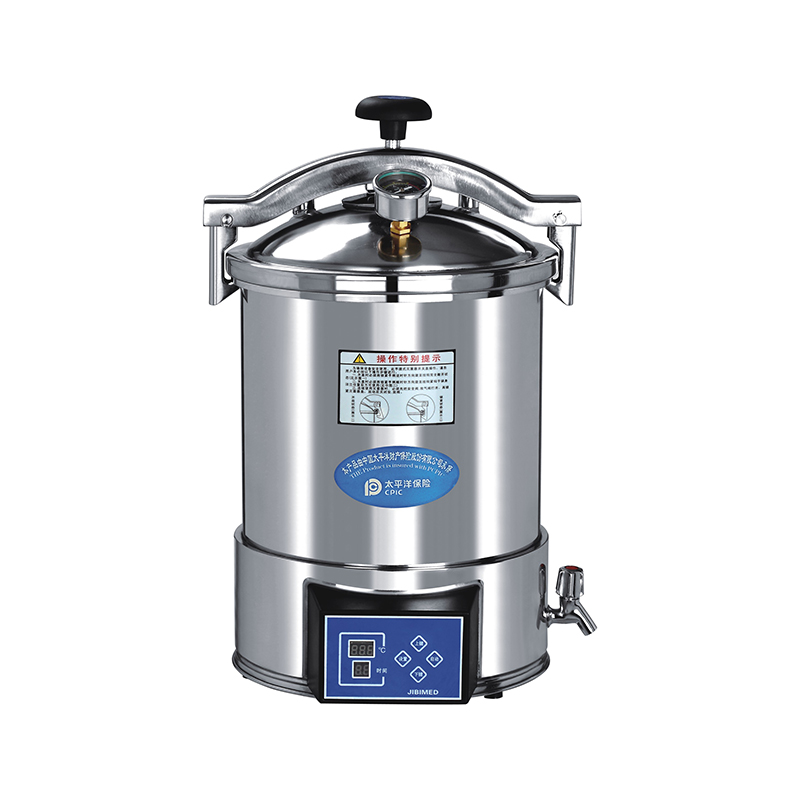
Effective steam sterilization depends on complete air removal. Residual air blocks steam penetration, creating cold spots that undermine microbial kill and raise patient and product risk. The air removal test verifies whether the autoclave’s vacuum system and steam injection can reliably purge air and achieve uniform, saturated steam conditions before the sterilization phase.
In practice, this test serves as a rapid, routine assurance of sterilizer performance, often performed daily before clinical or manufacturing loads. It is essential for pre-vacuum steam autoclaves used in healthcare, laboratories, pharmaceutical and device manufacturing.
Steam sterilization requires saturated steam at a controlled temperature and pressure. Air acts as an insulator and lowers the partial pressure of steam, preventing proper heat transfer to load surfaces. The test challenges the autoclave’s ability to remove air via pre-vacuum pulses and to ensure steam is evenly distributed without leaks, blockages, or control faults.
Two widely accepted methods assess air removal and steam penetration. Both are designed to detect faults in vacuum performance, steam quality, and leak-related air entrapment before processing real loads.
The Bowie-Dick test uses a specialized pack or test sheet that reacts to steam penetration. It challenges the sterilizer with a standardized resistance, revealing incomplete air removal through non-uniform color change patterns.
A helix device uses a narrow-lumen tube with an indicator at the end, simulating the worst-case scenario for steam penetration into long, small-bore instruments. It is particularly relevant when sterilizing tubular devices.
A consistent procedure ensures reliable results and early detection of performance drift. The steps below reflect common practice for pre-vacuum hospital and lab autoclaves.
Failure patterns on the indicator provide clues to root causes. Addressing them promptly prevents compromised sterilization and rework.
| Indicator Pattern | Likely Cause | Corrective Action |
| Patchy/uneven color | Residual air; weak vacuum | Leak test; service vacuum pump; check door seals |
| Edge-to-center gradient | Non-condensable gases; poor steam quality | Verify steam generator; purge lines; test dryness fraction |
| No change at distal helix end | Insufficient penetration into lumens | Increase pre-vacuum pulses; inspect PCD; confirm cycle parameters |
| Consistent failure after maintenance | Incorrect settings; sensor miscalibration | Recalibrate pressure/temperature; restore validated setpoints |
Regulators and standards bodies expect documented, routine air removal testing with clear criteria and traceable records. Aligning with recognized standards ensures consistent quality and defensibility of sterilization outcomes.
Auditable elements include SOPs, training records, test logs, maintenance reports, deviation investigations, and documented acceptance criteria. Facilities should map local regulatory requirements to internal quality systems and maintain readiness for inspections.
Consistency is the backbone of reliable sterilization. These practices help ensure your air removal tests reflect true performance and catch issues early.
During IQ/OQ/PQ, air removal performance is verified under controlled conditions and worst-case loads. Routine air removal tests then serve as an ongoing check that validated performance remains intact.
Link routine test outcomes to preventive maintenance schedules and deviation management. Persistent failures should trigger root-cause analysis, revalidation, and potential suspension of sterilization activities until resolution.
Air removal tests verify the autoclave’s ability to eliminate residual air and ensure uniform steam penetration—critical to sterilization efficacy and regulatory compliance. Use Bowie-Dick or helix methods daily, document results rigorously, and act swiftly on failures with structured troubleshooting.
| Test Type | When to Use | Pass Criteria |
| Bowie-Dick | Daily on pre-vacuum sterilizers | Uniform indicator change |
| Helix PCD | When processing lumen devices | Full change at distal end |
+86-510-86270699
ความเป็นส่วนตัว
ข้อมูลในเว็บไซต์นี้มีไว้สำหรับประเทศและเขตอำนาจศาลนอกเขตสาธารณรัฐประชาชนจีนเท่านั้น

ความเป็นส่วนตัว